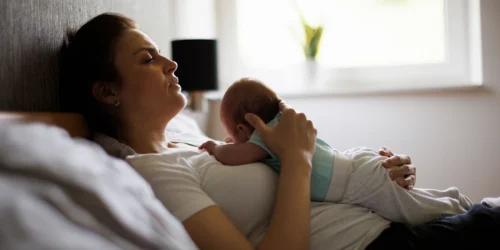

Your child is struggling, and you can see it. Maybe it’s the meltdowns that come from nowhere. Maybe it’s the silence at dinner when there used to be laughter. Maybe a teacher called, concerned about behavior changes you’ve been noticing at home, too.
Our clinical team has walked alongside families carrying that same weight – parents already stretched thin between work and caregiving, trying to figure out child therapy options in a region where specialized care can feel impossible to find.
Here’s what we want you to understand right now – children don’t process emotions the way adults do. Their brains are still developing. A seven-year-old who witnessed something frightening can’t sit across from a therapist and describe what happened in a linear, logical way. That’s not a failure. That’s how children are wired. The therapy modalities designed for kids meet them exactly where they are – through play, through art, through movement, through the language their developing minds actually speak.
Why Children Need a Completely Different Therapeutic Approach
Adults walk into therapy and talk. They describe feelings, recall memories, analyze patterns. Children – especially those under 12 – simply don’t have the cognitive architecture for that kind of verbal processing yet. Their prefrontal cortex, the brain region responsible for reasoning and emotional regulation, won’t fully mature until their mid-twenties.
So how do kids communicate what’s happening inside? Through behavior. Through play. Through the pictures they draw and the stories they tell with figurines in a sand tray. A child who can’t say “I feel scared and out of control” might build a scene with a tiny figure surrounded by monsters. A teenager who can’t articulate grief might paint it in colors that surprise even them. Evidence-based child therapy modalities rely on creative, sensory, and experiential approaches rather than traditional talk therapy for exactly this reason.
Play Therapy – Speaking Your Child’s Natural Language
Play therapy is probably the most widely recognized child therapy modality, and for good reason. For children, play is communication. It’s how they make sense of their world, test boundaries, and process experiences they can’t put into words.
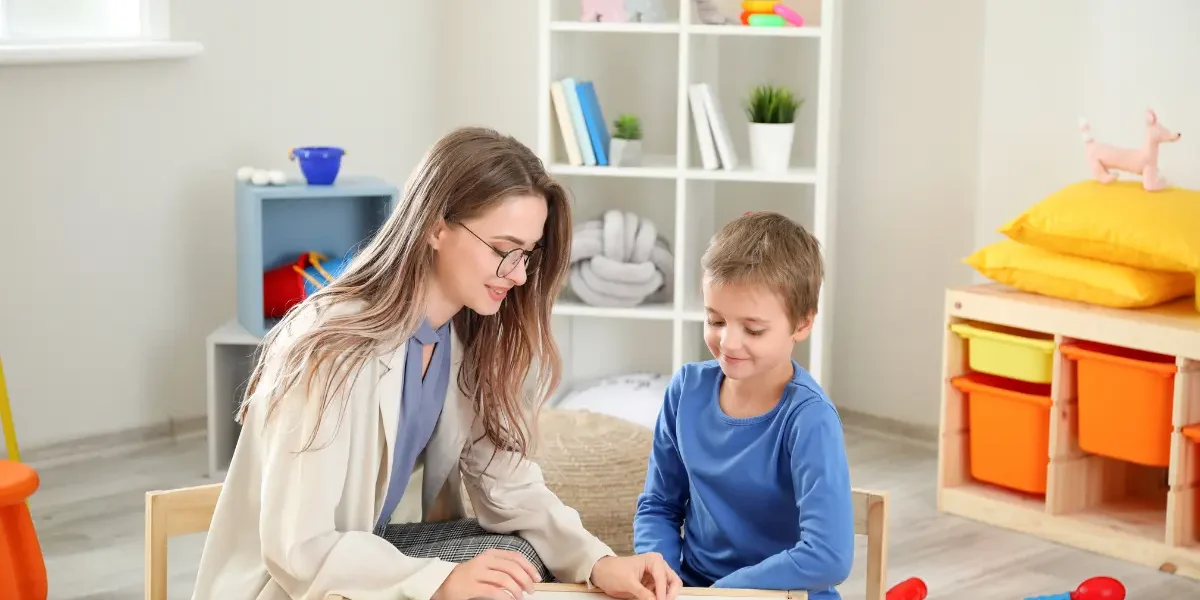
In a play therapy session, a trained therapist provides a carefully structured environment filled with specific toys, games, puppets, dollhouses, and creative materials. The child plays – and the therapist observes, reflects, and gently guides the process. What might look like “just playing” to an untrained eye is therapeutic work happening at a deep neurological level.
Play therapy may be effective for a wide range of childhood issues:
- Anxiety and fear responses – separation anxiety, social anxiety, and specific phobias
- Grief and loss – death of a loved one, divorce, significant relationship changes
- Trauma responses – abuse, witnessing violence, accidents, medical procedures, or hospitalization
- Behavioral concerns – aggression, defiance, or withdrawal at home and school
- Adjustment disorders – new schools, family moves, blended families, new siblings
Art Therapy – When Feelings Become Visible
Some children connect more naturally through visual expression than through play with toys. Art therapy uses drawing, painting, sculpting, collage, and other creative media to help children externalize internal experiences. And the research supports it. A 2025 research review published in the Australian and New Zealand Journal of Psychiatry found that art therapy demonstrated effectiveness in reducing PTSD symptoms, depression, and anxiety in young people with acute or severe mental health conditions. A meta-analysis published in Clinics (2024) found a meaningful decrease in anxiety symptoms through art therapy interventions in young people.
What makes art therapy different from art class? The focus isn’t on creating something beautiful. It’s on the process – what colors the child chooses, how they use space on the page, what themes emerge across sessions. A trained art therapist reads these visual cues the way a conversation therapist reads verbal ones.
Art therapy sessions might involve:
- Free drawing or painting – allowing emotions to surface without verbal pressure
- Guided prompts – drawing “a safe place” or “what your family looks like”
- Collage work – assembling images that represent feelings or experiences
- Sculpting with clay – engaging tactile senses to ground anxious children
Art therapy is particularly valuable for children who have experienced trauma, those with limited verbal skills, children on the autism spectrum, and kids who resist traditional talk-based approaches.
Sand Tray Therapy – Building Worlds to Make Sense of Theirs
Sand tray therapy is one of those modalities that surprises parents when they first hear about it. A tray of sand and miniature figurines? How does that help a hurting child?
The answer lies in how powerfully symbolic expression works for young minds. Developed from the work of Margaret Lowenfeld in the 1930s and later refined through Jungian psychology by Dora Kalff, sand tray therapy invites children to create scenes using sand and hundreds of small objects – people, animals, buildings, trees, fences, bridges, mythical creatures. The child builds a world, and that world reveals what’s happening inside them.
This modality is especially powerful for children dealing with trauma because it provides what clinicians call “aesthetic distancing.” The child isn’t talking about themselves directly. They’re telling a story through figures in sand. That distance creates safety – and safety allows processing to happen. Research has shown improvements in emotional resilience and self-esteem among children who engage in sand tray therapy, particularly those coping with trauma and anxiety.
EMDR – Advanced Trauma Processing for Children and Adults
Eye Movement Desensitization and Reprocessing (EMDR) has become one of the most well-researched trauma therapies available. The U.S. Department of Veterans Affairs and the World Health Organization both recognize EMDR as an effective treatment for PTSD. What many parents don’t realize – research suggests EMDR can be adapted for very young children, with some protocols designed for children as young as two years old according to the Child Mind Institute.
How does it work? When a person experiences trauma, the memory can get “stuck” in the nervous system – frozen with the original fear, helplessness, and sensory information. EMDR uses bilateral stimulation (eye movements, tapping, or alternating sounds) while the person briefly focuses on the traumatic memory. This appears to help the brain reprocess the memory so it becomes less overwhelming.
For adults, EMDR sessions often involve verbal recall and guided imagery. For children, the process looks quite different – and this is where integrating play therapy with EMDR becomes remarkable.
EMDR Combined with Play Therapy for Children
Children learn through action and imaginative play – not through verbal reflection. Clinicians trained in both EMDR and play therapy integrate these approaches while staying faithful to EMDR’s eight-phase protocol and meeting children in their natural language.
What this might look like in practice:
- Sand tray integration – using miniature figures to represent the traumatic memory and safe resources during processing
- Art-based preparation – having the child draw their “calm place” for grounding before reprocessing begins
- Puppet or toy-mediated processing – telling the trauma story through characters rather than first-person narration
- Movement-based bilateral stimulation – drumming, butterfly taps, or walking patterns instead of eye movement tracking
- Story-based approaches – for very young children, parents tell the trauma story while the child receives bilateral stimulation
Research by de Roos et al. (2017) found EMDR effective in reducing PTSD symptoms in children, with many participants no longer meeting diagnostic criteria after completing treatment. According to the Child Mind Institute, EMDR can be adjusted to meet children at their cognitive and developmental level, with family involvement playing a significant role in outcomes.
EMDR for Military Veterans and Adults with Complex Trauma
The same underlying mechanism that helps children also serves adults carrying deeply embedded traumatic memories. Military veterans dealing with combat-related PTSD have shown meaningful responses to EMDR treatment. A study published in Frontiers in Psychology found that intensive daily EMDR treatment produced outcomes comparable to weekly treatment with a one-year follow-up for veterans. A 2025 chart review confirmed EMDR’s effectiveness for veterans across both in-person and telehealth delivery.
The VA and Department of Defense include EMDR alongside Cognitive Processing Therapy and Prolonged Exposure in their clinical practice guidelines for PTSD. Research has also shown EMDR may help reduce symptoms beyond PTSD itself – including depression, anxiety, chronic pain, and moral injury – with one key advantage being that it does not require extensive homework or detailed verbal disclosure of traumatic events.
At Lumera Healthcare, our clinicians are trained in advanced EMDR psychotherapy techniques. Our approach may integrate play-based methods for children and adapted protocols for adults, including veterans experiencing combat-related trauma.
What Issues Respond Well to Child Therapy?
Parents often wonder whether their child’s struggles “warrant” therapy. Here’s an honest answer – if the behavior is interfering with daily life, relationships, or development, therapy is worth exploring. Issues that respond well to the modalities above include:
- Grief and loss – death of a parent, sibling, grandparent, or pet
- Abuse and neglect – physical, emotional, or sexual abuse requiring specialized trauma treatment
- Medical trauma – hospitalizations, surgeries, painful procedures, chronic illness
- Anxiety disorders – generalized anxiety, separation anxiety, school refusal, social anxiety
- Adjustment disorders – divorce, relocation, family changes, foster care transitions
- Behavioral challenges – aggression, emotional dysregulation, oppositional behavior
- PTSD and complex trauma – witnessing violence, repeated adverse experiences, community trauma
What to Expect – Sessions, Parent Involvement, and Preparing Your Child
Walking into a therapist’s office for the first time is intimidating for anyone – especially a child. Here’s what the process generally looks like.
The First Steps
Most child therapy begins with a parent intake session – a conversation between you and the therapist without your child present. This gives the clinician context about history, current concerns, and family dynamics. For EMDR, clinicians may meet with multiple family members before beginning treatment.
What Sessions Look Like
Sessions last 30 to 50 minutes depending on age. The therapy room is designed to feel safe and inviting – not clinical. You’ll see toys, art supplies, sand trays, and comfortable seating. Your child may spend sessions playing, drawing, building, or doing guided activities. Older children and teens may blend creative approaches with more verbal conversation.
Parent Involvement
You matter enormously in this process. Therapists provide regular parent check-ins and may teach you skills to support your child between appointments. For younger children receiving EMDR, parents often participate directly. For school concerns, therapists may coordinate with teachers with your permission.
Talking to Your Child About Starting Therapy
Keep it simple and honest. Younger children respond well to: “You’re going to meet someone whose job is to help kids with big feelings. You’ll get to play and do art.” Avoid using therapy as a consequence. Kids take their emotional cues from parents – if you present therapy matter-of-factly, they’re more likely to approach it openly.
Age Ranges and Developmental Fit
- Ages 2-5: Play therapy is primary. Sand tray with simple figures. EMDR may be adapted with parent-child protocols and storytelling approaches.
- Ages 6-9: Full range of play therapy, art therapy, and sand tray. EMDR with play-based integration.
- Ages 10-12: Children may begin blending creative modalities with more verbal processing. EMDR can incorporate more standard protocols.
- Ages 13-17: Teens may prefer art therapy or verbal EMDR over play-based approaches. Therapy increasingly resembles adult approaches with developmental adjustments.
Therapist Credentials and Specialized Training
Working with children requires training beyond a general therapy license. When choosing a child therapist, look for:
- Registered Play Therapist (RPT) – requires supervised play therapy hours beyond licensure
- EMDR-trained or EMDR-certified clinician – with specialization in child and adolescent protocols
- Licensed clinical professionals – such as LCSWs, LPCCs, or LMFTs with child-specific training
- Board-certified child psychiatrists – for cases requiring medication evaluation alongside therapy
At Lumera Healthcare, our clinical team includes licensed therapists and psychiatrists trained in child and adolescent treatment. Our integrated care model means that if your child needs psychiatric evaluation alongside therapy – or if family therapy would support their progress – those services are coordinated under one roof.
School Behavior, Emotional Regulation, and Measurable Progress
How will you know it’s working? Progress in child therapy doesn’t always look dramatic. The meltdowns happen less frequently. Mornings before school become easier. A teacher mentions your child is participating more. Teachers frequently report improvements in peer relationships, fewer disciplinary incidents, and better focus once children develop stronger emotional regulation skills through therapeutic work.
Taking the First Step for Your Child
If you’ve read this far, you’re already doing something important. Children’s brains are remarkably resilient when given the right support at the right time. The therapy modalities we’ve covered – play therapy, art therapy, sand tray therapy, and EMDR – are backed by research and designed specifically for how young minds process, heal, and grow.
You don’t have to drive hours for specialized care. Lumera Healthcare provides children’s therapy and psychiatry across our Western Kentucky locations with clinicians trained in child and adolescent treatment. We accept all major insurance, Medicaid, Medicare, and offer sliding scale options. If your child is struggling, reach out through our referral portal or call to schedule an assessment.
If your child is struggling, we’re ready to help you figure out the next step.
- Submit a referral online – Use our referral portal to share your child’s information and a member of our team will follow up to guide you through scheduling.
- Call us directly – Prefer to talk to someone first? Call (270) 310-9200 to speak with our team about what your child is experiencing and what services may be a fit.
- Request an assessment – Not sure where to start? An initial assessment helps our clinicians understand your child’s needs and recommend the right level of care.
You’ve already taken the hardest step by looking for answers. Let us help with the rest.
Disclaimer
The information on this blog is for general educational purposes only and does not constitute medical/mental health advice, diagnosis, or treatment. It does not create a clinician-patient relationship with Lumera Healthcare. Do not use this information to make decisions regarding medication or treatment; always consult a qualified provider. External data is not guaranteed to be accurate.
Emergency: If you are in a crisis, call 911 or the 988 Suicide & Crisis Lifeline immediately.
By reading this blog, you agree that Lumera Healthcare is not responsible for any actions taken based on this content.