

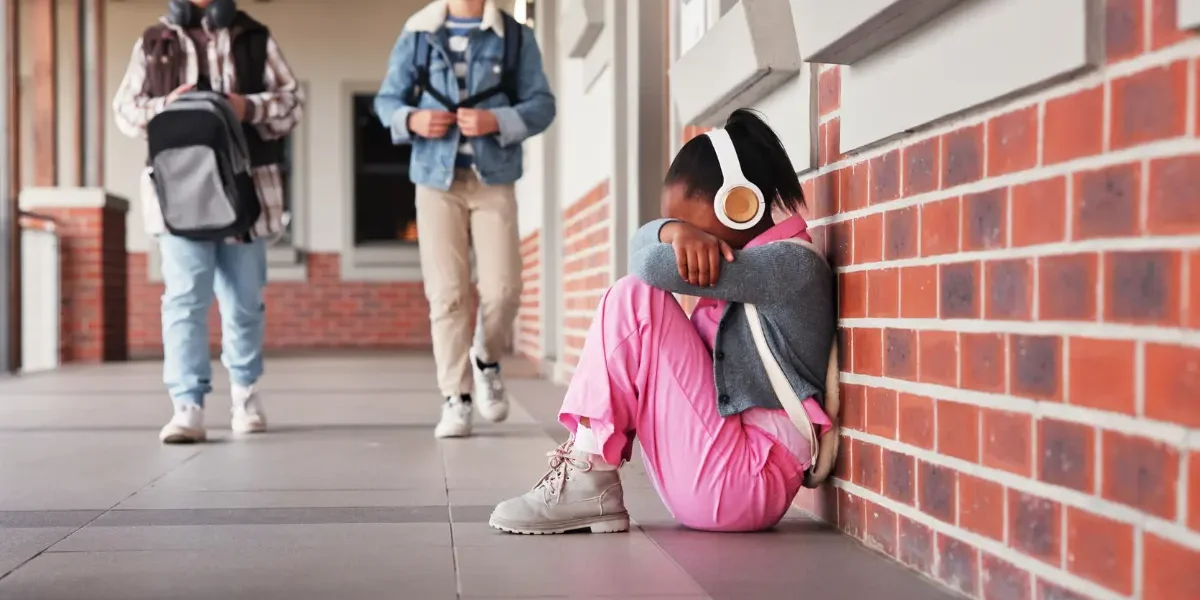
Your child used to love school. Now every morning is a battle. The stomachaches start at breakfast. The tears come in the car. Some days, they refuse to get out of bed entirely. You’ve tried reasoning, bribing, demanding – and nothing works. Worse, you’re watching your child slip further behind academically and socially with every missed day.
If this sounds familiar, you’re dealing with something more serious than a kid who doesn’t want to do homework. School anxiety affects an estimated 2% to 5% of all school-aged children according to StatPearls clinical data, and the problem has intensified significantly since the pandemic. A 2025 RAND report found that in roughly half of urban school districts, more than 30% of students were chronically absent during the 2024-2025 school year. The National Institutes of Health estimates that as many as 28% of children experience some form of school avoidance, with the highest rates among 10- to 13-year-olds and children transitioning between schools.
This isn’t a discipline problem. It’s a mental health signal. And the earlier you respond to it, the better the outcome for your child. Working with a therapist who specializes in anxiety can make a significant difference, especially when school avoidance has already started affecting academics and friendships.
School Anxiety vs. Truancy – Why the Difference Matters
Parents hear “your child is missing too much school” and immediately feel blamed. But school anxiety and truancy are fundamentally different situations that require completely different responses.
A child with school anxiety wants to be okay with going to school. They’re not sneaking off to hang out with friends. They’re home – often in visible distress – and their parents typically know exactly where they are. The avoidance is driven by emotional pain, not defiance. Research published in 2025 found that 94.3% of school attendance difficulties involve underlying mental health concerns like depression, anxiety, or post-traumatic stress.
Truancy, by contrast, involves deliberate absence without emotional distress about school itself – often without parental knowledge. The motivation is different, the behavior pattern is different, and the intervention needs to be different.
When a school frames your child’s anxiety-driven absence as a behavior problem, it adds shame to an already overwhelming situation. Understanding this distinction gives you the language to advocate for your child with teachers and administrators – and to pursue the right kind of help.
What’s Actually Behind Your Child’s School Anxiety
School refusal rarely has a single, simple cause. A 2024 systematic review in Current Psychology identified a broad range of contributing factors across individual, family, and environmental categories. In our clinical experience, these are the most common drivers we see in the children and families we work with.
- Separation anxiety. Most common in younger children (ages 5-7), this involves intense fear about being away from a parent or caregiver. The child isn’t afraid of school itself – they’re afraid of the separation. For families already dealing with stress at home, this can intensify quickly.
- Social anxiety. Fear of judgment, embarrassment, or social interaction at school. A 2025 study in Educational and Developmental Psychologist found increased social anxiety traits were directly associated with increases in school refusal behavior following the pandemic. This is especially common in middle school when social dynamics become more intense.
- Bullying. Sometimes a child won’t tell you directly. They may not even recognize what’s happening as bullying – particularly with social exclusion, online harassment, or subtle verbal aggression. Research consistently identifies peer victimization as a significant factor in school avoidance.
- Learning disabilities. An undiagnosed learning difference can make every school day feel like an exercise in failure. When a child struggles to keep up and doesn’t understand why, school becomes a source of daily shame. As one pediatric psychologist noted in a 2025 national survey, “Sometimes kids don’t want to go to school because they have an undiagnosed learning disability, making school stressful for them.”
- Trauma. Adverse childhood experiences – abuse, neglect, witnessing violence, a parent’s addiction, a family death – can make the school environment feel unsafe even when it technically is. A child in a hypervigilant state can’t relax enough to learn, and their brain may interpret normal school stressors as genuine threats. If you’re a parent who experienced childhood trauma yourself, understanding how it shaped your own nervous system can also help you recognize what your child may be carrying.
- Generalized anxiety or depression. Sometimes the anxiety isn’t specific to school at all. It’s a broader condition that shows up most visibly during the school day because that’s where the highest demands are placed on a child’s coping ability. Parents often aren’t sure whether what they’re seeing is a panic attack or an anxiety attack, and knowing the difference can help you describe symptoms more clearly to a provider.
Many children present with overlapping causes. A child with an undiagnosed learning disability who’s also being bullied and has anxiety will need support on multiple fronts. That’s why a thorough clinical assessment matters more than guessing the root cause.
What You Can Do Right Now – Immediate Strategies for Parents
While professional help may be needed, there are things you can start doing today to support your child and slow the escalation cycle.
- Validate the emotion without accommodating the avoidance. Say “I can see you’re really scared” instead of “there’s nothing to be afraid of.” Acknowledging their feelings is different from agreeing they should stay home. Dismissing the emotion makes it worse.
- Establish a predictable morning routine. Anxiety thrives in uncertainty. A consistent, calm sequence of morning activities reduces the number of decisions your child has to make when their anxiety is highest.
- Create a “bridge person” at school. Identify one trusted adult – a counselor, teacher, or office staff member – your child can go to when they feel overwhelmed during the day. Knowing they have a safe person reduces the all-or-nothing feeling of “I either have to handle this alone or go home.”
- Avoid long absences when possible. The research is clear on this point – the longer a child stays away from school, the harder it becomes to return. Even partial attendance (arriving late, leaving early, attending specific classes) maintains some connection to the school environment.
- Watch for physical symptoms. A 2025 Ipsos survey found that 42% of students who missed school due to anxiety said they didn’t feel physically well enough to attend. Stomachaches, headaches, nausea, and fatigue are real physical symptoms of anxiety – not fabrication. Take them seriously while also recognizing their source.
- Separate your anxiety from theirs. This is hard. When your child is suffering, your own stress and worry grow. But children absorb parental anxiety. If you’re visibly panicked about the situation, your child reads that as confirmation that something is genuinely wrong.
When It’s Time to Get Professional Help
Some level of school reluctance is normal – especially during transitions like starting kindergarten, moving to middle school, or beginning a new school year. But certain signs indicate the situation has moved beyond what home strategies can address.
- Missing multiple days per week or refusing to attend altogether
- Physical symptoms (stomachaches, headaches, vomiting) that appear only on school days
- Extreme emotional reactions – panic attacks, inconsolable crying, aggressive outbursts when school is mentioned
- Social withdrawal from friends and activities they previously enjoyed
- Sleep disruption – difficulty falling asleep, nightmares, or refusing to sleep alone
- Academic decline that’s accelerating despite effort
- Duration beyond two weeks of consistent school avoidance behavior
If you’re seeing several of these signs, professional assessment can identify what’s driving the behavior and create a targeted treatment plan. Cognitive behavioral therapy (CBT) has strong evidence for reducing school-related anxiety and improving attendance.
For children with trauma histories, specialized approaches like EMDR therapy can address the underlying experiences fueling the anxiety response. For older children and teens whose school avoidance hasn’t improved with weekly therapy, a teen intensive outpatient program may provide the additional structure needed to get back on track.
If you want to understand how these modalities work and what to expect in a session, our parent’s guide to child therapy breaks down each approach in detail.
At Lumera Healthcare, our children’s mental health services focus on understanding the whole picture – not just the school avoidance symptom. We combine psychiatry and therapy under one roof, with an emphasis on non-pharmacological approaches and medication reduction where appropriate. Our clinicians work with children as young as four and understand the unique pressures facing families in Western Kentucky.
Working With Your Child’s School – How to Build a Team Approach
School anxiety doesn’t get resolved in the therapist’s office alone. The school environment needs to be part of the solution.
Start with your child’s school counselor. They can be a critical ally in connecting your child with classroom accommodations, monitoring their emotional state during the day, and communicating between teachers and your treatment team. Many school counselors also provide referrals to outside mental health providers when the situation exceeds what school-based support can address.
Here’s what an effective school collaboration plan might include.
- A graduated return schedule for children who have been absent for extended periods – starting with partial days and building up
- A designated safe space in the school where your child can go to decompress when anxiety peaks
- Modified expectations during the transition period – reduced homework load, flexible test-taking arrangements, excused tardiness
- Regular communication between your child’s therapist and school counselor (with your consent) so everyone is working from the same plan
- A 504 plan or IEP if your child’s anxiety qualifies as a condition that substantially limits their ability to access education
Lumera Healthcare has built partnerships with schools across Western Kentucky. We understand how school systems in our region work, and our case management team can help coordinate between your child’s treatment and their school’s support systems. That coordination makes a measurable difference in how quickly children return to consistent attendance.
Back-to-School Season – A Critical Window for Early Intervention
August and September are when school anxiety peaks. The transition from summer’s relative freedom back to structured days, social pressures, and academic expectations creates a perfect storm for anxious children. If your child struggled with school anxiety last year, the pattern is likely to resurface – and may intensify.
Early intervention during this window prevents the escalation cycle that leads to chronic absenteeism later in the school year. If you know your child is vulnerable, don’t wait for the crisis to arrive. Schedule an assessment before school starts or within the first few weeks. Getting support in place early – before the avoidance pattern solidifies – gives your child the strongest chance of a successful school year.
You’re Not Failing as a Parent
If you’re reading this article, you’re doing exactly what a good parent does – looking for answers when your child is struggling. School anxiety carries a particular weight for parents because it touches education, daily functioning, social development, and your child’s emotional wellbeing all at once. And in a small community where everyone notices when your child isn’t in school, the pressure can feel suffocating.
Your child’s anxiety is not a reflection of your parenting. It’s a treatable condition that responds well to the right combination of therapy, family support, and school collaboration. Children recover from school anxiety every day – especially when the adults around them work together and intervene early.
If your child is struggling, reach out to our team through our referral portal or call our office directly. We accept all major insurance, Medicaid, Medicare, and offer sliding scale options. Telehealth appointments are available for families who can’t make the drive. Your child deserves to feel safe at school again – and we can help you get there.
Psychiatric treatments, including medications and therapy, may involve risks and side effects. This information is provided for outreach and awareness purposes only and does not constitute medical advice. Licensed clinicians and medical providers conduct evidence-based assessments to determine the most appropriate individualized treatment plan.
Disclaimer
The information on this blog is for general educational purposes only and does not constitute medical/mental health advice, diagnosis, or treatment. It does not create a clinician-patient relationship with Lumera Healthcare. Do not use this information to make decisions regarding medication or treatment; always consult a qualified provider. External data is not guaranteed to be accurate.
Emergency: If you are in a crisis, call 911 or the 988 Suicide & Crisis Lifeline immediately.
By reading this blog, you agree that Lumera Healthcare is not responsible for any actions taken based on this content.