
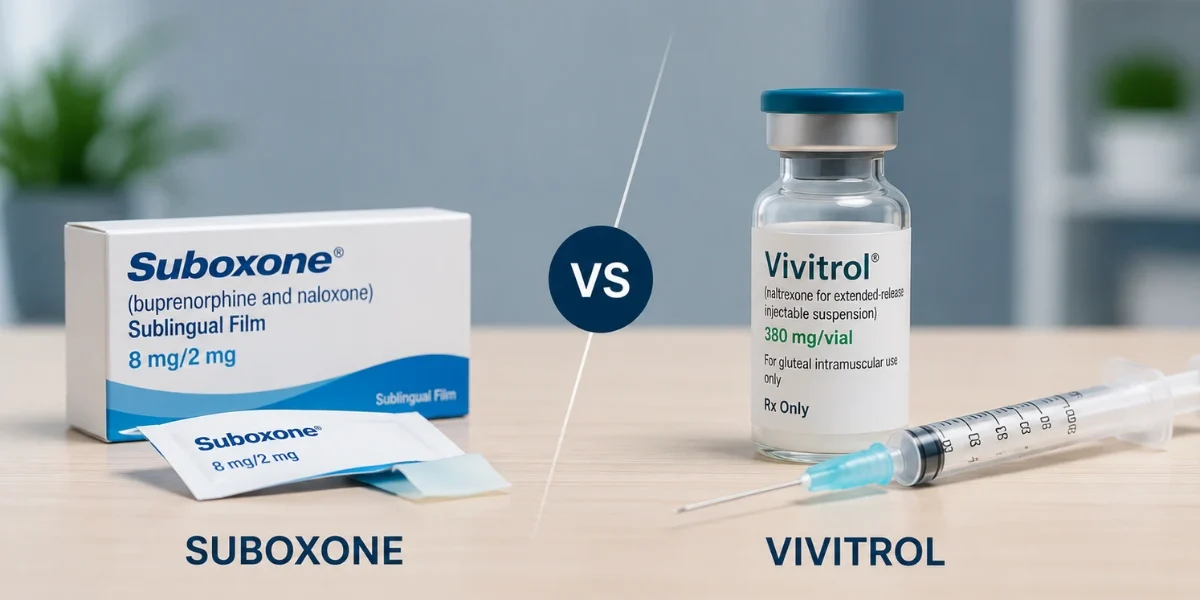
Your addiction specialist just told you about medication options for opioid addiction treatment. You walked out of the appointment with names that sound more like pharmaceutical tongue twisters than solutions – Suboxone, Vivitrol, buprenorphine, naltrexone. Your calendar shows another week of struggling with cravings, another week of wondering if you’ll relapse before you even understand what these medications actually do.
Patients researching opioid use disorder treatment face contradictory information about these two FDA-approved medications. Some sources claim Suboxone means “trading one addiction for another.” Others warn that Vivitrol requires painful withdrawal before you can start. Here’s what actually separates these medications – and how to determine which one fits your recovery stage, medical situation, and treatment goals.
How Suboxone and Vivitrol Work Differently in Your Brain
Suboxone and Vivitrol represent opposite approaches to blocking opioid addiction at the receptor level. Understanding this fundamental difference guides every other treatment decision.
Suboxone’s dual-ingredient approach:
- Buprenorphine (primary component): Functions as a partial opioid agonist that binds to mu-opioid receptors but only partially activates them
- Creates “ceiling effect”: Reduces withdrawal symptoms and cravings without producing intense euphoria that drives continued opioid misuse
- Naloxone (safety mechanism): Remains largely inactive when taken properly under the tongue, but triggers immediate withdrawal if someone attempts to inject Suboxone to get high
Vivitrol’s complete blocking mechanism:
- Naltrexone antagonist action: Binds tightly to opioid receptors but doesn’t activate them at all
- 28 to 30 day blockade: Completely blocks receptors for approximately one month after each injection
- Removes reinforcement: If you use heroin or prescription opioids while on Vivitrol, you won’t feel euphoria, pain relief, or any rewarding effects
The practical difference matters enormously for treatment planning. Suboxone’s partial agonist activity means you can start the medication while still experiencing mild withdrawal symptoms – typically 12 to 24 hours after your last short-acting opioid use. Vivitrol’s complete blocking mechanism requires full opioid detoxification first. You must be completely opioid-free for 7 to 10 days before receiving your first Vivitrol injection, otherwise the medication triggers severe precipitated withdrawal.
Starting Treatment: Critical Timing Differences Between These Medications
When you can actually start each medication determines which option works for your current situation.
Suboxone timing requirements:
- Short-acting opioids: Wait 12 to 24 hours after last use (heroin, oxycodone, hydrocodone)
- Long-acting opioids: Wait 24 to 72 hours or longer (methadone, extended-release formulations)
- Required withdrawal signs: Sweating, dilated pupils, elevated heart rate, agitation assessed by clinician
- Starting too early risk: Precipitated withdrawal when buprenorphine displaces stronger opioids
- Microdosing option: For methadone or high-dose fentanyl transitions – start with very small amounts and gradually increase
Vivitrol timing requirements:
- Complete abstinence required: Before starting Vivitrol, patients generally need to be opioid-free for at least 7–10 days. Patients transitioning from methadone or buprenorphine may need a longer period and should be managed carefully by a qualified clinician.
- Acute withdrawal period: Most physically and psychologically challenging phase of early recovery
- High relapse risk: Many patients relapse before receiving first injection without medical support
- Best setting: Residential treatment programs with medical supervision through detoxification
- Urine testing: A clinician may use urine testing, history, physical examination, and sometimes a naloxone challenge to help assess whether it is safe to start Vivitrol.
Side Effects and Safety Concerns You Should Expect
Both medications produce side effects, but the types and severity differ based on their mechanisms.
Common Suboxone side effects include:
- Headache and nausea: Typically occur during the first few weeks as your body adjusts to buprenorphine
- Constipation: Often persists throughout treatment since all opioid medications slow digestive function
- Sweating and insomnia: May improve after the initial adjustment period
- Mouth numbness: Occurs where the sublingual film dissolves
- Respiratory depression risk: Significantly increases when Suboxone combines with benzodiazepines, alcohol, or other central nervous system depressants
- Transmucosal buprenorphine products, including Suboxone films, have also been associated with dental problems such as cavities, tooth decay, tooth fracture, and tooth loss. Patients should discuss oral-health precautions and regular dental care with their prescriber.
Vivitrol’s side effects center on injection site reactions and the blocking mechanism itself:
- Injection site reactions: Pain, tenderness, swelling, and redness occur commonly after monthly gluteal injections
- Serious tissue damage risk: Tissue death requiring surgical intervention has been reported when Vivitrol is inadvertently administered subcutaneously rather than deep into muscle – female patients show higher rates in postmarketing data
- Nausea and headache: Particularly common after the first injection, typically decreasing with subsequent doses
- Decreased appetite and fatigue: May affect daily functioning initially
- Depression monitoring required: Clinical trials showed slightly higher rates of suicidal ideation compared to placebo, though absolute numbers remained low
- Vivitrol also carries an important overdose risk. After missing a dose, stopping treatment, or near the end of the monthly dosing interval, a person’s opioid tolerance may be lower. Trying to overcome the medication’s opioid blockade by taking large amounts of opioids can cause serious injury, coma, or death. Patients should have access to naloxone or another opioid overdose reversal medication.
Pain management creates challenges for both medications but particularly for Vivitrol. .Vivitrol can make opioid pain medications much less effective and complicate emergency, surgical, or dental pain management. Non-opioid pain medications, regional anesthesia, and specialized monitoring may be needed. Patients should tell all healthcare providers that they are receiving Vivitrol.
Suboxone patients retain some opioid receptor activity, making pain management somewhat easier but still complicated. The buprenorphine ceiling effect limits additional opioid effectiveness. Acute pain management often requires consultation between your Suboxone prescriber, the treating physician, and pain specialists to develop safe, effective approaches.
How You Actually Take These Medications
Administration methods affect convenience, adherence, and treatment success.
Suboxone administration:
- Form: Sublingual films or tablets that dissolve under your tongue or against your cheek
- Frequency: Once daily
- Dissolution time: 5 to 10 minutes – you shouldn’t eat, drink, talk, or smoke during this period
- Dose adjustments: Based on withdrawal symptom control and craving reduction
Typical Suboxone visit schedule:
- First month: Weekly clinic visits for dose adjustments and monitoring
- Months 2-3: Every two weeks after stabilization
- Ongoing: Monthly visits once stable
- Telehealth option: Telehealth may be available for appropriate patients, with medication monitoring, toxicology screening, and in-person visits determined by clinical need, payer requirements, and applicable law.
This accessibility makes Suboxone particularly practical for patients in rural Western Kentucky who might drive over an hour to reach specialized addiction treatment.
Vivitrol administration requirements:
- Monthly clinic visits: Required for administration by trained healthcare provider
- Observation period: Brief stay after injection to monitor for adverse reactions
- Cannot self-administer: Eliminates home medication management but requires reliable transportation
What Research Shows About Starting and Staying on Treatment
A major 2018 study directly compared Suboxone and Vivitrol effectiveness in 570 patients entering treatment at eight detoxification programs. The results revealed important differences in treatment retention and relapse rates.
Suboxone showed better outcomes across multiple measures:
- Treatment retention: Average of 14 weeks before relapse compared to 8 weeks for Vivitrol patients
- Abstinent days: 81 abstinent days over 6 months compared to 39 days for Vivitrol
- Opioid-free days: Average of 10 opioid-free days compared to 4 days for Vivitrol
- Treatment initiation success: 94% successfully started Suboxone compared to only 72% for Vivitrol
The difference primarily stemmed from treatment initiation rates. Only 72% of patients randomized to Vivitrol successfully started the medication, compared to 94% of those assigned to Suboxone. The 7 to 10 day waiting period and complete detoxification requirement created a barrier that many patients couldn’t overcome. Those who successfully started either medication showed similar relapse protection – the challenge was getting onto Vivitrol in the first place.
Insurance Coverage and Cost Considerations
Medication costs affect treatment accessibility, especially for extended recovery periods that may last months or years.
Suboxone:
- Insurance coverage: Most plans including Medicaid cover cover FDA-approved medications for OUD, but coverage, prior authorization, pharmacy access, and out-of-pocket costs vary by plan and medication.
- Prior authorization: May require prescriber documentation of medical necessity
- Pharmacy visits: More frequent but fewer clinic appointment costs after stabilization
Vivitrol:
- Insurance requirements: Prior authorization typically requires proof of completed detoxification and naloxone challenge test
- Monthly provider fees: Professional administration adds to medication costs
- Transportation considerations: Rural patients may drive 60 to 90 minutes each direction for monthly appointments
Financial assistance options:
- Manufacturer patient assistance programs for eligible patients
- Vivitrol copay cards may reduce costs for commercially insured patients
- Buprenorphine manufacturer assistance programs available
- State Medicaid programs with varying coverage policies
Addressing the “Trading Addictions” Concern
The most persistent myth about Suboxone claims that taking buprenorphine simply replaces opioid addiction with Suboxone addiction.
This misunderstanding confuses physical dependence with addiction. Here’s the critical distinction:
Physical dependence (normal physiological adaptation):
- Body adapts to regular medication presence
- Stopping abruptly causes withdrawal symptoms
- Represents expected physiology, not addiction
- Similar to insulin dependence for diabetes or antidepressants for depression
Addiction (behavioral disorder):
- Compulsive drug-seeking behavior despite harmful consequences
- Loss of control over use
- Continued use despite wanting to stop
- Chasing higher doses for greater effects
A common misconception is that taking buprenorphine-naloxone is simply “replacing one addiction with another.” In medical treatment, physical dependence and addiction are not the same thing. Physical dependence means the body has adapted to a medication and withdrawal can occur if it is stopped suddenly. Addiction involves compulsive use despite harm, loss of control, and continued use despite serious consequences.
Buprenorphine is an opioid medication and must be taken exactly as prescribed. When used appropriately for OUD, it can reduce cravings and withdrawal symptoms and help patients function more steadily in recovery. It still requires medical monitoring because it can be misused and can be dangerous when combined with alcohol, benzodiazepines, sedatives, or other opioids.
Comparing Suboxone to insulin for diabetes or antidepressants for depression provides a helpful perspective. Diabetics depend on insulin for blood sugar control, but we don’t call this addiction. People with depression depend on antidepressants for mood stability, but this isn’t an addiction either. Suboxone similarly provides medication-assisted normalization of brain chemistry disrupted by opioid use disorder.
Vivitrol avoids physical dependence entirely because naltrexone functions as a pure antagonist without agonist activity. Stopping Vivitrol doesn’t trigger withdrawal symptoms. However, this doesn’t automatically make Vivitrol superior – the lack of withdrawal relief during early recovery contributes to higher treatment dropout rates before patients can even start the medication.
Making the Right Choice for Your Recovery Stage
The medication that works best depends on where you are in recovery and your specific circumstances.
Suboxone typically works better when:
- You’re starting treatment from active opioid use: The ability to begin within 12 to 72 hours rather than waiting 7 to 10 days makes Suboxone practical for outpatient treatment initiation.
- You need withdrawal symptom relief: Buprenorphine’s partial agonist activity reduces the physical and psychological distress that often derails early recovery.
- You have limited access to intensive medical supervision: Suboxone allows home-based treatment with periodic clinic or telehealth check-ins rather than requiring inpatient detoxification before starting medication.
- You prefer daily medication you control: Some patients value the ability to self-administer medication at home rather than depending on monthly clinic visits.
- Cost considerations matter significantly: Generic buprenorphine-naloxone costs less than Vivitrol injections, particularly for patients with limited insurance coverage.
Vivitrol may work better when:
- You completed detoxification in a residential program: Having already achieved 7 to 10 days of abstinence with medical support removes Vivitrol’s main barrier. Patients transitioning from methadone or buprenorphine may need a longer period.
- You want to avoid any opioid medication: Naltrexone’s complete antagonist profile appeals to patients concerned about taking medication with opioid activity.
- Daily medication adherence challenges you: Monthly injections eliminate the need for daily medication decisions that might lead to missed doses or discontinued treatment.
- You have co-occurring alcohol use disorder: Vivitrol’s FDA approval for alcohol dependence treatment makes it valuable for dual addiction to opioids and alcohol.
- Legal or employment requirements: Some legal, employment, or monitoring situations, patients may have specific medication restrictions or preferences. These situations should be reviewed carefully with the treatment team so the patient receives evidence-based, legally appropriate care.
Treatment Duration and Long-Term Recovery
Neither medication represents a quick fix. Research consistently shows that longer treatment duration produces better long-term outcomes.
Treatment duration should be individualized. Some patients benefit from months of medication treatment, others from years, and some remain on medication long-term when it continues to support recovery and reduce relapse or overdose risk. Stopping medication should be planned with a qualified prescriber.
Counseling, peer support, case management, and treatment for co-occurring mental health conditions combined with medications may strengthen recovery. However, medication treatment should not be delayed simply because counseling is not immediately available or a patient is not yet ready to participate.
Medication removes the physiological drive toward continued opioid use, creating space for you to develop coping skills, address underlying issues, rebuild relationships, and establish a life that doesn’t revolve around drug use..
Getting Started with Medication-Assisted Treatment in Western Kentucky
If you’re struggling with opioid addiction, both Suboxone and Vivitrol offer evidence-based pathways toward recovery. The choice between them depends on your current situation, recovery stage, medical history, and personal preferences. Working with addiction specialists who understand both medications helps you identify the approach that fits your needs rather than forcing you into a one-size-fits-all treatment plan.
At Lumera Healthcare, our integrated addiction treatment team provides comprehensive medication-assisted treatment combined with therapy, case management, and support services. We prescribe both Suboxone and Vivitrol based on individualized assessment of what will work best for your recovery. Our five locations across Western Kentucky offer accessible care for patients throughout the region, with telehealth options available for ongoing Suboxone management.
Taking the first step toward treatment means you’re ready to reclaim your life from opioid addiction. Whether you start with Suboxone’s withdrawal relief or Vivitrol’s complete blockade after detoxification, medication-assisted treatment significantly improves your chances of long-term recovery compared to attempting abstinence-only approaches. You don’t have to face this alone or figure out the medication decision without professional guidance. Contact us today to learn more.
*** Psychiatric treatments, including medications and therapy, may involve risks and side effects. This information is provided for outreach and awareness purposes only and does not constitute medical advice or clinical efficacy claims. Licensed clinicians and medical providers conduct evidence-based assessments to determine the most appropriate individualized treatment plan.